



Freezing cooked meat is one of the most practical kitchen techniques for saving time, reducing food waste, and keeping meals ready for future use. In busy households, cooking fresh meals every day is not always possible, so storing cooked meat properly becomes extremely useful.
However, freezing meat is not just about putting it in the freezer. If done incorrectly, it can lead to loss of flavor, dry texture, freezer burn, and even food safety issues. That is why learning how to freeze cooked meat properly is important for maintaining both taste and quality.
When stored correctly, cooked meat can stay fresh for weeks or even months while still retaining its original flavor and texture.
Why Freezing Cooked Meat is Useful
Freezing cooked meat offers many advantages for home kitchens:
- Saves cooking time on busy days
- Reduces food waste
- Helps in meal preparation planning
- Keeps food available for emergencies
- Maintains nutritional value when stored correctly
It is especially helpful for families, working professionals, and meal prep routines.
Types of Cooked Meat You Can Freeze
Almost all cooked meats can be frozen if handled properly.
Common examples include:
- Chicken curry
- Grilled chicken
- Fried chicken (without sauce)
- Beef curry
- Mutton gravy
- Minced meat dishes
- Roast meat
Each type may require slightly different storage methods depending on moisture and gravy content.
Step 1: Cool Meat Properly Before Freezing
One of the most important steps is cooling the meat before freezing.
Why cooling is important:
- Prevents bacterial growth
- Avoids ice crystals formation
- Maintains texture and flavor
How to cool:
Let cooked meat sit at room temperature for 30–60 minutes. Do not leave it out for too long, especially in warm environments.
Once it reaches room temperature, it is ready for packaging.
Step 2: Portioning the Meat
Before freezing, divide cooked meat into small portions.
Benefits of portioning:
- Easy to thaw only what you need
- Prevents repeated freezing and thawing
- Saves time during meal preparation
For example, store chicken curry in 1–2 serving portions instead of one large container.
Step 3: Choosing the Right Storage Containers
The container you use plays a big role in maintaining quality.
Best options:
- Airtight freezer-safe containers
- Zip-lock freezer bags
- Vacuum-sealed bags
- Glass containers (freezer-safe only)
Important tip:
Remove as much air as possible before sealing. Air causes freezer burn and reduces quality.
Step 4: Proper Packaging Technique
Good packaging ensures long-lasting freshness.
For containers:
- Fill leaving small space at the top
- Seal tightly
- Label with date and contents
For zip-lock bags:
- Flatten the bag before freezing
- Remove all air
- Lay flat for easy stacking
Flat freezing also saves freezer space.
Step 5: Labeling and Dating
Always label your frozen meat.
Include:
- Type of meat
- Cooking date
- Portion size
This helps track freshness and prevents confusion later.
Step 6: Ideal Freezer Temperature
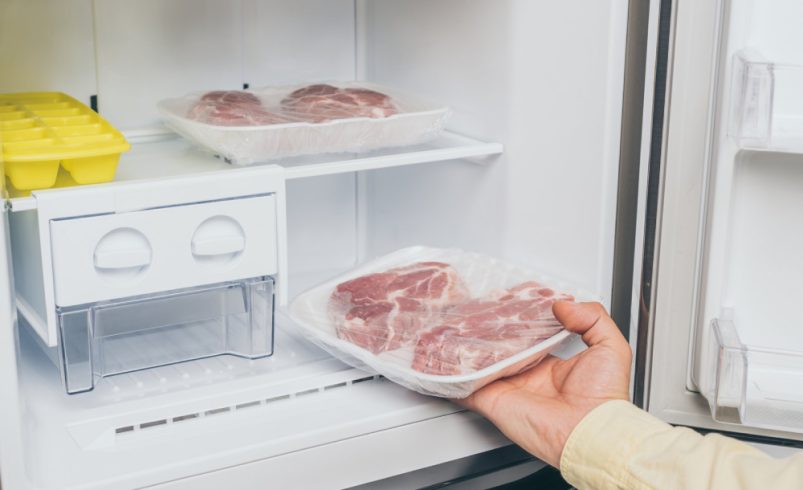
To safely freeze cooked meat, your freezer must be at the right temperature.
Ideal range:
-18°C (0°F) or lower
This temperature slows bacterial growth and preserves food quality.
How Long Can Cooked Meat Be Frozen?
Different types of cooked meat have different storage durations:
- Chicken: 2–3 months
- Beef: 2–3 months
- Mutton: 2–3 months
- Minced meat dishes: 1–2 months
- Gravy-based dishes: 1–2 months
For best taste, consume within recommended time.
Step 7: Preventing Freezer Burn
Freezer burn happens when food is exposed to air inside the freezer.
Signs:
- Dry texture
- Discolored surface
- Loss of flavor
Prevention tips:
- Use airtight packaging
- Remove excess air
- Wrap food tightly
- Avoid long storage beyond recommended time
Step 8: Best Way to Thaw Frozen Meat
Proper thawing is just as important as freezing.
Safe methods:
1. Refrigerator thawing (best method)
Move frozen meat to fridge and let it thaw overnight.
2. Cold water method
Place sealed bag in cold water and change water every 30 minutes.
3. Microwave thawing
Use only if cooking immediately after.
Important:
Never thaw meat at room temperature for long periods.
Step 9: Reheating Frozen Cooked Meat
Once thawed, meat should be reheated properly.
Methods:
- Stovetop heating (best for curries)
- Oven reheating
- Microwave reheating
Tip:
Add a little water or broth while reheating to restore moisture.
Common Mistakes in Freezing Cooked Meat
Many people make simple mistakes that affect food quality:
- Freezing hot meat directly
- Not removing air from containers
- Storing in non-freezer-safe boxes
- Refreezing thawed meat
- Keeping food too long in freezer
Avoiding these mistakes ensures better taste and safety.
Pro Tips for Best Results
- Freeze in small portions
- Use high-quality airtight containers
- Label everything clearly
- Use freezer within recommended time
- Add sauces or gravy before freezing for moisture retention
These small habits greatly improve results.
Freezing Meat with Gravy vs Dry Meat
Meat with gravy:
- Stays more moist
- Easier to reheat
- Better flavor retention
Dry meat:
- May become slightly dry after freezing
- Needs extra moisture when reheating
Gravy-based dishes freeze better overall.
Nutritional Value After Freezing
Freezing does not significantly reduce nutrients if done correctly.
- Protein remains intact
- Minerals are preserved
- Flavor remains stable
- Texture may slightly change if stored too long
Proper freezing maintains most nutritional benefits.
Benefits of Freezing Cooked Meat
- Saves cooking time
- Reduces daily workload
- Helps in meal planning
- Prevents food waste
- Keeps food ready anytime
It is one of the most useful kitchen management techniques.
Final Thoughts
How to Freeze Cooked Meat is an essential kitchen skill for modern households. When done correctly, it helps preserve food safely while maintaining taste, texture, and nutrition.
By following proper cooling, packaging, labeling, and thawing methods, you can enjoy ready-to-eat meals anytime without compromising quality.
Freezing is not just storage—it is smart cooking management that makes life easier and more efficient.